When I think I have it all figured out, I automatically think I know the whole truth of something. I do NOT maintain a beginner’s mind, stay humble or curious, bring my full discernment, or stay open to an unfiltered experience of what is occurring.
When I am functioning on autopilot, my current understanding of reality feels like reality itself. Instead of recognizing “this is the lens through which I see,” I assume “this is simply how things are.” That makes it harder to notice experiences, perspectives, or feedback that could deepen—or correct—my understanding. I know through conversations with clients, students, friends and colleagues I am not alone.
Recently I learned there is a term for this, paradigm blindness.
This is a “cognitive and organizational state in which individuals, groups, or institutions become so deeply entrenched in a specific framework, worldview, or set of assumptions that they are unable to recognize alternative perspectives, perceive new facts, or notice obvious flaws in their thinking.”

I can feel the resistance inside of me and in the world around me as I am learning more and expanding my capacity to notice paradigm blindness.
A dear friend and I had an enlightening conversation about how this occurs in spiritual communities as well as other groups. It is pervasive. Paradigm blindness can look like certainty, commitment, or spiritual confidence. From inside the framework, rejecting a challenge may feel like defending truth rather than defending an assumption.
What I am noticing is paradigms are shifting at an accelerated pace. This brings me hope.
People are increasing their awareness of paradigm blindness inside themselves and in the world. More exposure to what has been hidden in many areas of society is forcing a complete change in how people think or do things. We are observing constantly which old era rules, beliefs, assumptions, theories, and structures are not working.
Toxic paradigm blindness is a cognitive and cultural state where people become completely insensitive or blind to harmful, outdated, or exploitative systems/paradigms because those systems have been normalized over a long time. They can include normalization of control, hierarchy, inertia, lack of accountability, and stagnation. YUCK!
It feels SO important to get out of this limiting at best toxic at worst mindset and assumptions.
- How do I notice my bias?
- What if I am overlaying my distortion and I cannot see it?
- How do I break out of paradigm blindness and disrupt my habitual assumptions?
- How do we recognize this occurring in our organizations, institutions, and groups throughout society?
Here are some ideas and possibilities to transcend paradigm blindness.
Practice mindfulness.
Throughout the day, pause to recenter, and remember to pay attention in the present moment on purpose with as little judgement as possible.
Observe your thoughts.
An important key to self-awareness is the capacity to clearly assess your condition in the present moment. This requires developing an observer, witness, or watcher perspective. Notice your thoughts like a mirror.
Examine what a belief helps you avoid.
Using ideas to sidestep painful feelings, unresolved wounds, or necessary interpersonal action is often called bypassing and reinforces paradigm blindness.
Challenge your assumptions.
Assumptions are made of our thoughts, beliefs, and opinions. Detect when you treat an unverified thought, prediction, or past habit as truth.
Ask instead of assuming.
Listen carefully and ask questions to discover a deeper truth with others.
Have a growth mindset.
Believe that your intelligence, abilities, and skills are not fixed, and that you can improve them through effort, learning, and persistence.
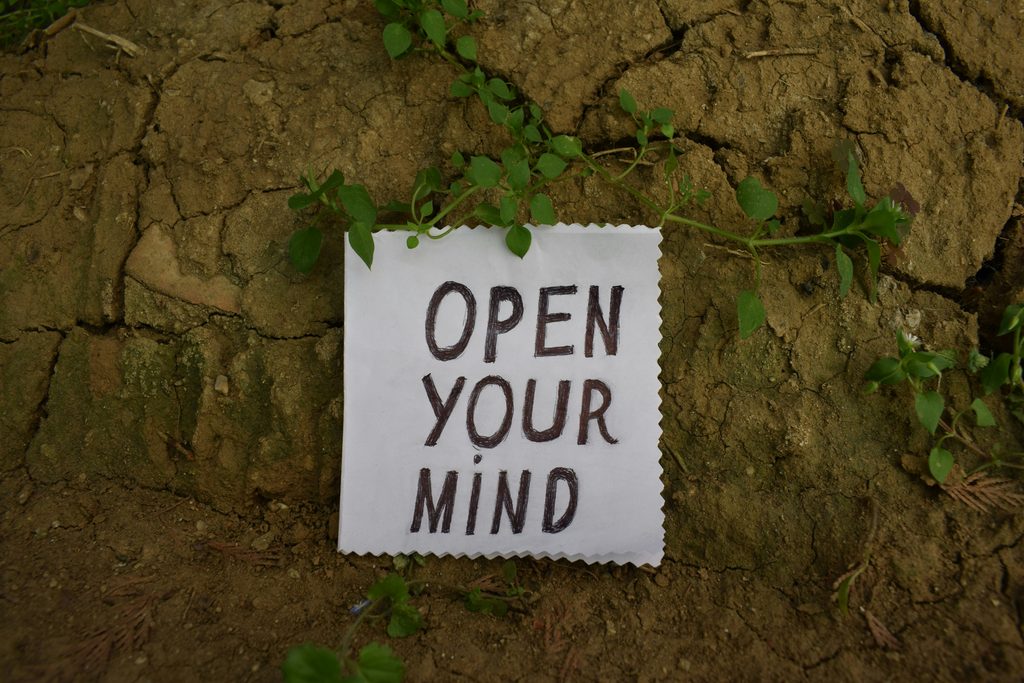
Be open-minded.
Be humble, curious, empathetic, and open to challenging your beliefs.
Examine your expectations.

Observe your silent mental rules, your disappointments when a hidden demand or rule was just broken, and your “shoulds”.
Monitor your confirmation bias.
Pay attention to the habit of only looking for facts that prove you right.
Cultivate curiosity.
Ask disruptive questions to challenge yourself and seek diverse or opposing lenses and viewpoints.
Develop spiritual intelligence.
This involves not only gaining new insights but becoming more aware of the assumptions through which you interpret those insights. The essential shift is from “my understanding cannot be questioned” to “my understanding can guide me while remaining open to correction.”
Watch your capacity to access higher levels of consciousness expanding.
Embrace your increasing abilities in intuition, clairvoyance, clairaudience, clairsentience, or claircognizance.
Let’s do this together!